
Jordan Davis
BREAKING: Florida Man Who Shot Unarmed Black Teen After Loud Music Dispute Convicted Of Murder
by Nicole Flatow Posted on
Posted on 
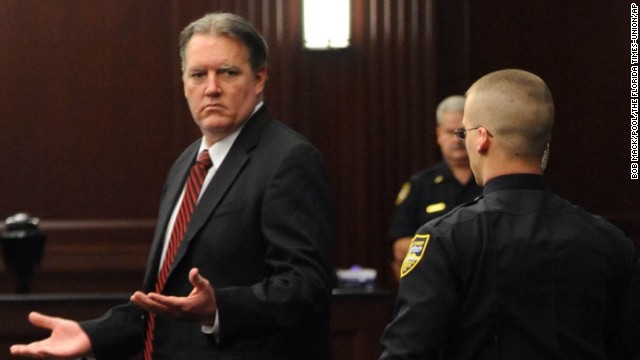
Michael Dunn in court
CREDIT: AP Photo/The Florida Times-Union, Bob Mack, Pool
Jordan’s father Ron Davis said after the verdict Thursday that he “wanted Jacksonville to be an example” that you can have a jury made up of mostly white individuals, and still see justice. “ Let’s make sure the decisions we make … are based on witness’ testimony and the importance of the case and not a bias against one another,” he said.
The shooting occurred in the parking lot outside a Jacksonville convenience store, after Dunn asked the car of teens including Davis to turn their music down. His fiancée, Rhonda Rouer, says the last thing she heard him say was, “I hate that thug music.” Rouer was in the convenience store when she heard gunshots, and when she ran outside, he told her to get in the car and they drove away.
Dunn claimed he saw a gun and believed the boys were armed and dangerous. But police found no gun in the car. He said he heard Davis threaten to kill him, and responded by rolling down the window of his car and asking, “Are you talking to me?” Dunn and Rouer left the scene without calling 911 and spent the night in a hotel, as planned, and their testimony differed about what happened that night, and in the days that followed.
In February, Dunn was found guilty on three counts of second-degree attempted murder — one for each of three of Dunn’s friends who were also in the line of fire as Dunn fired ten rounds into their sport utility vehicle. The jury deadlocked on the first-degree murder charge, the judge declared a mistrial on the first degree murder count, allowing prosecutors to reach a new trial. Dunn faces a mandatory sentence of 25 years to life in prison without parole.
Just prior to that first trial, the State Attorney’s Office released a set of letters Dunn sent from prison revealing significant animus toward blacks. “The more time I am exposed to these people, the more prejudiced against them I become,” he said in one. “This jail is full of blacks and they all act like thugs,” he said in another.
The letters did not come into play during trial. But they reveal the sort of racial undertones that have been prominent in many Stand Your Ground cases. One study found that white defendants with black victims are far more likely to have their killings deem “justified” under the Stand Your Ground law, which was cited during the first trial. After that trial, one juror told ABC News that the reason for the deadlock was because several jurors believed Dunn was “justified” in shooting Davis under Florida’s self-defense laws. She pointed to a section of the jury instructions that includes the state’s notorious Stand Your Ground law as being central to their deliberations.
***********************************
Dunn convicted of attempted murder; hung jury on murder in 'loud music' trial
updated 2:03 AM EST, Mon February 17, 2014
Jury finds Dunn guilty on four counts
STORY HIGHLIGHTS
- Michael Dunn is convicted on three counts of attempted second-degree murder
- But there's a mistrial on first-degree murder; prosecutors say they'll seek a new trial
- Dunn faces 60 years in prison, possibly 15 more for another charge
- The teen killed, Jordan Davis, would have celebrated his 19th birthday Sunday
Sunday, they should have
celebrated Jordan Davis' birthday with him. Instead, they faced the
prospect of a new trial for the man accused of killing him.
A jury in Jacksonville on
Saturday found Michael Dunn guilty of attempted second-degree murder
for opening fire on three other teens in the same SUV as Jordan Davis --
but deadlocked on the murder charge against him in Davis' death.
Prosecutors had argued
that Dunn recklessly shot at the teens after complaining about the
volume of their music in a convenience store parking lot. Three of his
10 shots struck Davis, one of them cutting through his liver, a lung and
his aorta.
Dunn testified that Davis threatened him and that he thought he saw a gun sticking out of the Dodge Durango.
But Ron Davis said his
son was a good kid and didn't deserve to be collateral damage in an
argument over loud music. McBath said she was happy for a little bit of
closure.
"It's sad for Mr. Dunn
that he will live the rest of his life in that sense of torment, and I
will pray for him," McBath said. "And I have asked my family to pray for
him, but we are so grateful for the charges that have been brought
against him. We are so grateful for the truth."
And moments before
prosecutor Angela Corey said she would seek a new trial on the murder
charge, McBath said she and her ex-husband will continue to stand up for
their son, who was 17 when he was killed.
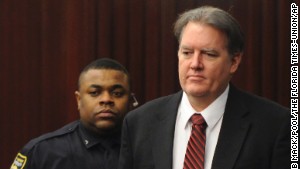 Dunn's attorney: There were no winners
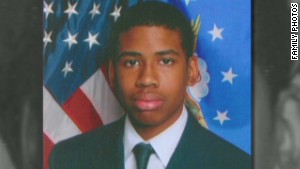 Jordan Davis' mom: Grateful for verdict
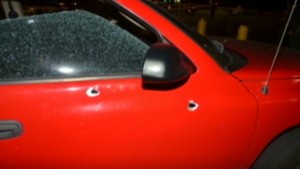 Michael Dunn trial is in jury's hands
"We will continue to wait for justice for Jordan," she said.
Shooter faces decades in prison
A jury on Saturday night
convicted Dunn of three charges of attempted murder for shooting at the
other three teenagers in the SUV and one count of shooting into the
vehicle on November 23, 2012.
As the jury's decisions
became clear about 7 p.m. Saturday, Dunn looked ahead solemnly with a
frown but no tears. His lawyer, Cory Strolla, told reporters later that
his client was "in disbelief."
"Even as he sat next to
me, he asked, how is this happening," Strolla said. "... It has not set
in. I don't think it will set in anytime soon."
Ron Davis was pleased that Dunn face 60 years or more in prison for the attempted murder charges.
"He is going to learn
that he must be remorseful for the killing of my son, that it was not
just another day at the office. My son will never be just another day at
the office where (Dunn) can leave the scene and be stoic," he told
reporters.
He wanted it known that Jordan was not a troublemaker.
"It wasn't allowed to be
said in the courtroom, but he was a good kid. We will say it. He was a
good kid," he said. "There are a lot of good kids out there ... and they
should have a voice. They shouldn't live in fear and walk around the
streets worrying about if someone has a problem with somebody else that
if they are shot, it is just collateral damage."
The incomplete finale to
this hot-button trial -- emotionally charged partly because Dunn is
white and the teenagers he shot at are black -- echoed George
Zimmerman's trial for the killing of 17-year-old Trayvon Martin about
120 miles down the road in Sanford, Florida. While the state's "stand
your ground" law wasn't used by Dunn, his lawyers did argue that he
fired in self-defense.
Another murder trial?
Given the partially hung
jury, Corey, Florida's state attorney, said prosecutors would press for
a new trial in Duval County on the murder charge.
"Justice for Jordan Davis is as important as it is for any victim," said Corey, whose office also handled the Zimmerman case.
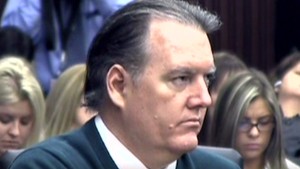 Closing arguments wrap up Dunn trial
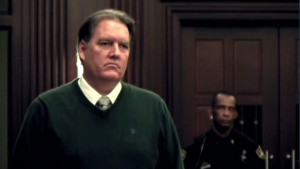 Dunn: 'It was life or death'
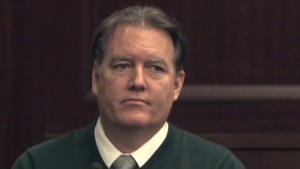 Michael Dunn: I was fighting for my life
Even without a final
decision on the murder count -- and pending defense appeals -- the
47-year-old Dunn is looking at a lengthy prison term.
Prosecutor Erin Wolfson
explained Saturday night that each attempted second-degree murder
conviction carries a minimum sentence of at least 20 years. There's also
a 15-year sentence possible on the conviction for shooting into the
teenagers' vehicle.
"You are looking
basically at life in prison," Strolla said, even as he vowed to
challenge the convictions. "At 47 years old, that's a life sentence
regardless of count one."
CNN legal analyst Paul
Callan said in most cases prosecutors will take some time after a
mistrial to reflect on the case before planning the next steps.
"If he winds up with 60
or 75 years in jail, from a pragmatic standpoint it doesn't make a whole
lot of sense to retry the case," he said Sunday. "On the other hand if
you're the parents of Jordan Davis and you believe, as well you should,
that your son's reputation has been besmirched by this self-defense
claim, the family (might) want a retrial, and that's something that a
prosecutor has to consider carefully.
"Hopefully (Corey will) look carefully at the pluses and minuses of doing a retrial."
The decision to convict
on these counts, and not on murder, didn't come easily for a jury that
had deliberated for about 30 hours since getting the case late
Wednesday.
Judge Russell Healey
acknowledged earlier Saturday that the jury of four white women, two
black women, four white men, an Asian woman and a Hispanic man was
"struggling, obviously."
"But it's not for want
of trying to reconcile all of this," he said then. "I think we've got
some analytical people in there who are trying to do just that -- trying
to analyze this from every possible angle."
The lack of a murder
conviction upset some, including protesters who marched outside the
Jacksonville courthouse calling for Corey to lose her job. "The people
united will never be defeated," they chanted.
Confrontation at a gas station
It was November 23,
2012, when Michael Dunn pulled into a gas station in Jacksonville,
parking next to a red Dodge Durango with four teenagers inside.
The teens had come in
for gum and cigarettes; Dunn, meanwhile, had just left his son's wedding
with his fiancee, who'd gone inside the convenience store for wine and
chips.
Dunn didn't like the loud music -- "rap crap," as he called it -- coming from the teens' SUV. So he asked them to turn it down.
What followed next depends on whom you believe. Dunn says Davis threatened
him, and he decided to take matters into his own hands upon seeing what
he thought was the barrel of a gun sticking out of the Durango.
But prosecutors say it
was Dunn who lost control, firing three volleys of shots -- 10 bullets
total -- at the SUV over music he didn't like.
Prosecutors challenged
what he did next: He left the gas station and drove to his hotel, about
three miles away. There, Dunn walked his dog, ordered a pizza, then
drank rum and cola -- "stunned and horrified, (shocked how) things
escalated the way they did over a common courtesy."
After learning almost
six hours later that he had killed Davis, Dunn testified that he became
"crazy with grief," experiencing stomach problems for about four hours
before taking a nap.
"My intent was to stop the attack, not necessarily end a life," he testified. "It just worked out that way."
Yet his fiancee, Rhonda
Rouer, testified that Dunn had never mentioned any weapon to her -- be
it a shotgun, a stick, a barrel or a lead pipe.
In fact, police found a
basketball, basketball shoes, clothing, a camera tripod and cups inside
the teenagers' Durango. There was no gun.
Dunn himself never
called police. The first contact he had with them was at his home in
Satellite Beach as he was being apprehended.
Arguing that he wasn't
in a rational state of mind, Dunn admitted, "It makes sense that I
should have (contacted authorities). We didn't. I can't tell you why."
Echoes of Trayvon Martin and George Zimmerman
Some people were quick to compare Dunn to Zimmerman, who ultimately was acquitted of murder for the shooting of Martin.
Martin's own parents
were among them, claiming Davis' killing is another reminder that, in
Florida, "racial profiling and stereotypes" may serve as the basis for
illegitimate fear "and the shooting and killing of young teenagers."
But Dunn's defense attorney, Strolla, told CNN's Chris Cuomo on Friday that the Zimmerman and Dunn cases aren't so similar.
There was a physical
confrontation between Zimmerman and Martin, and police gave Zimmerman
the benefit of the doubt about defending himself, Strolla said.
"My client did not wait
to become that victim," he said. "My client did not wait to either get
assaulted by a weapon or have someone potentially pull a trigger," he
said.
Though a weapon was
never found, Strolla maintains the youths could have had one and somehow
ditched it. He said the key point was that Dunn believed they were
armed and that his life was in danger.
"Now, does it sound irrational? Of course it sounds irrational. But have you ever been in that situation?" the lawyer asked.
Strolla said Saturday
the four convictions leave him with regret, even as he said he couldn't
immediately think of anything he'd do differently in the case.
At the same time, the prosecution didn't manage a conviction on what was by far the biggest charge: first-degree murder.
This mixed bag means that no one can fully celebrate the jury's decision.
"Everybody lost something in this," the lawyer said.
His client "will live to
fight another day" in court, but he and his loved ones are suffering
now, Strolla said. He acknowledged, too, the pain felt by Davis' family.
***************************************************************************
 Florida man shoots and kills 17-year-old teen after argument over loud music at gas station
Michael Dunn, 45, shot and killed teen Jordan Davis in Jacksonville on Friday, cops said. His lawyer said he acted in self-defense, drawing comparisons to the Trayvon Martin case.
Comments (322)By Philip Caulfield / NEW YORK DAILY NEWS
Wednesday, November 28, 2012, 8:54 AM

Investigators say Michael Dunn, 45, of Brevard County, shot Jordan
Davis, 17, of Jacksonville on Friday after an argument over loud music
at a gas station.
A Florida man asked a group of teens at a gas station to turn down the
loud music blaring from their car and, after an exchange of words,
opened fire on the vehicle, killing a 17-year-old boy, authorities said.
His lawyer said Dunn, who is white, thought he saw a gun and felt threatened during the incident, indicating that he may seek protection under the state’s controversial Stand Your Ground Law, according to local reports.
"Self defense applies because Mr. Dunn was threatened," attorney Robin Lemonidis told CNN.
"We can't say what the defense will be at this stage … but Stand Your Ground is a possibility."
The alleged murder occurred on Friday as Dunn and his girlfriend were traveling to Jacksonville for his son’s wedding, the Orlando Sentinel reported.
The pair pulled into a gas station parking lot and stopped next to an SUV, which Davis was sitting in with three other teens, authorities said.
While his girlfriend was inside the store, Dunn asked the teens to turn down the loud music they were playing, cops said.
Davis said something back and there was a heated exchange, authorities said.
Dunn then pulled a gun and fired at least eight shots, hitting Davis twice, cops told the Sentinel.
Dunn and his girlfriend then left the scene.
The Sentinel said the two were staying in a Jacksonville hotel on Saturday when they heard news reports about the teen’s death and drove back to his home in Satellite Beach.
He was arrested at his home on Saturday and charged with murder and attempted murder.
He remains in jail after being denied bond on Monday.
No guns were found inside the teens’ car, authorities said.
Davis’ family demanded justice, saying there was no way Dunn fired in self-defense.
"He did something that there was no defense for," Ron David, Jordan’s father, told CNN.
The shooting immediately drew comparisons to the murder of Trayvon Martin in February, which sparked protests over Florida’s self defense laws and accusations that George Zimmerman, the neighborhood watch volunteer who shot him, was a racist.
Lemonidis said his client was “no vigilante.”
“There are no comparisons to the Trayvon Martin situation," Lemonidis told CNN. "(Dunn) is devastated and horrified by the death of the teen."
Jordan, who was a student at a magnet school in Duval County, will be buried in his hometown of Marietta, Ga., where his mother lives, according to reports.
****************************************************
His lawyer said Dunn, who is white, thought he saw a gun and felt threatened during the incident, indicating that he may seek protection under the state’s controversial Stand Your Ground Law, according to local reports.
"Self defense applies because Mr. Dunn was threatened," attorney Robin Lemonidis told CNN.
"We can't say what the defense will be at this stage … but Stand Your Ground is a possibility."
The alleged murder occurred on Friday as Dunn and his girlfriend were traveling to Jacksonville for his son’s wedding, the Orlando Sentinel reported.
The pair pulled into a gas station parking lot and stopped next to an SUV, which Davis was sitting in with three other teens, authorities said.
While his girlfriend was inside the store, Dunn asked the teens to turn down the loud music they were playing, cops said.
Davis said something back and there was a heated exchange, authorities said.
Dunn then pulled a gun and fired at least eight shots, hitting Davis twice, cops told the Sentinel.
Dunn and his girlfriend then left the scene.
The Sentinel said the two were staying in a Jacksonville hotel on Saturday when they heard news reports about the teen’s death and drove back to his home in Satellite Beach.
He was arrested at his home on Saturday and charged with murder and attempted murder.
He remains in jail after being denied bond on Monday.
No guns were found inside the teens’ car, authorities said.
Davis’ family demanded justice, saying there was no way Dunn fired in self-defense.
"He did something that there was no defense for," Ron David, Jordan’s father, told CNN.
The shooting immediately drew comparisons to the murder of Trayvon Martin in February, which sparked protests over Florida’s self defense laws and accusations that George Zimmerman, the neighborhood watch volunteer who shot him, was a racist.
Lemonidis said his client was “no vigilante.”
“There are no comparisons to the Trayvon Martin situation," Lemonidis told CNN. "(Dunn) is devastated and horrified by the death of the teen."
Jordan, who was a student at a magnet school in Duval County, will be buried in his hometown of Marietta, Ga., where his mother lives, according to reports.
****************************************************

No comments:
Post a Comment