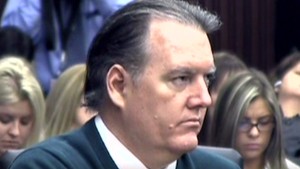
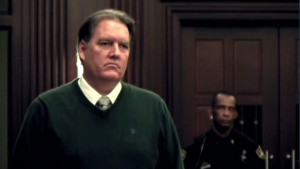
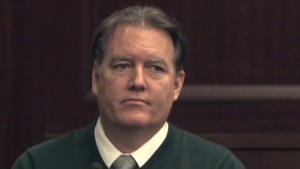
Wednesday, July 17, 2013

The Death of Darius Simmons - Milwaukee, Wisconsin


Darius Simmons
**********************************************************************************

John Henry Spooner sentenced to life in prison for killing unarmed teen

Patricia Larry (facing front), the mother of Darius Simmons, hugs Ald. Milele Coggs after John Henry Spooner was sentenced Monday.

Mike De Sisti

Patricia Larry (facing front), the mother of Darius Simmons, hugs Ald. Milele Coggs after John Henry Spooner was sentenced Monday.

Spooner was sentenced Monday to life in prison without the possibility of parole, a punishment Milwaukee County Circuit Judge Jeffrey A. Wagner said fit the "horrific, egregious act" of killing a 13-year-old neighbor.

"There should never be any light in the tunnel for you," Wagner said to nods in the courtroom gallery, filled to near-capacity Monday afternoon. "This is one of the worst of the worst."

The judge also ordered Spooner to pay $58,551 in restitution to the Simmons family.

Spooner appeared in an orange jumpsuit for the first time Monday, his prison apparel replacing the short-sleeved, checkered shirt he had donned during his trial last week. As Wagner told him he would spend the rest of his life behind bars, Spooner gazed back impassively.

Spooner's sentencing hearing followed a weeklong trial split into two phases — a guilt phase and an insanity phase. A jury found Spooner guilty of first-degree intentional homicide in Simmons' death on Wednesday and, two days later, deemed him criminally responsible for his actions, rejecting Spooner's insanity defense in less than 15 minutes of deliberation. Spooner took the witness stand Thursday against the advice of his lawyer and told a stunned courtroom that he considered Simmons' death "justice."

Simmons was retrieving a garbage can from the curb when Spooner gunned him down, demanding the teenager return four shotguns he believed Simmons had taken from his home two days earlier. When Simmons said he did not have the guns — and when his mother, Patricia Larry, threatened to call the police from the front porch — Spooner shot the teenager in the chest. He fired a second shot that missed, and attempted a third, but his gun jammed.
 
Police searched the victim's home after the incident and found none of the missing guns.

Spooner addressed the court again Monday during his sentencing hearing, reiterating his exasperation over the stolen guns and dwelling on the perplexity of videos retrieved from his surveillance cameras successfully capturing his confrontation with Simmons but failing to show who had broken into his home two days earlier.

He said he didn't know if what he did was right or wrong.

"I feel sorry for Darius. He had nobody who loved him enough to teach him to go straight," Spooner said, eliciting an expletive from Simmons' older brother, Theodore Larry.

Spooner alleged during his trial that Simmons' mother directed the burglary, telling her children to rob a "sick, old man," he said.

"May God forgive you, Ms. Larry, for your lying and cheating and stealing," Spooner said. "I don't know if I did right or wrong. The jury didn't tell me. Nobody told me."

Wagner tried to remove any doubt in Spooner's mind, telling him, "You did wrong. You took the life of a child."

"It was an evil act," Wagner added. "That family is left without the love of their child. (Simmons) will never be able to experience childhood, to go through high school ...to go to college, to get married, to have children. You took that all away from him."

Though bound by a mandatory life sentence, the court had the option of permitting the consideration of Spooner's release with extended supervision after a minimum 20 years in prison, Assistant District Attorney Mark Williams said before the sentencing.

Williams asked Wagner to impose the maximum sentence and to deny Spooner the chance of ever leaving jail.

"He's going to die in prison with murderers and rapists, and that's the choice he made," Williams said. "He believed what he did was right, and that's what makes him so dangerous."

Larry, on the other hand, said Monday she would pray for Spooner, that she has "no hate for this man."

Still, she said she wants Spooner "to be held accountable for what he did to (her) son Darius Simmons" and asked Wagner to sentence him to life in prison.

"He is a menace to society," Larry said. "No mother should have to go through this."

Larry read only a brief, prewritten statement and declined to comment after the sentencing. Simmons' brother and the family pastor, Steve Jerbi, also made statements asking for a life sentence.

"My brother lost his life over something he didn't do," Larry said. "(Spooner) should be in jail for the rest of his life."

A maximum sentence

Defense attorney Franklyn Gimbel said the court's decision about parole eligibility was inconsequential, calling the prospect of Spooner living for another 20 years "totally improbable." Afflicted by cancer, heart disease and recurring bouts of pneumonia over the years, his client does not have long to live, Gimbel said.

Yet because his conviction marked Spooner's first contact with the criminal justice system, Gimbel asked the court to leave open the possibility that Spooner be considered for release after 20 years, albeit as an "academic exercise," Gimbel said.

"Prior to the day of May 31, 2012, John Spooner was an average working human being," Gimbel said. His four adult children did not attend the trial because they do not "endorse their father's conduct," Gimbel said, but "they love their father."

Wagner said the severe sentence would deter others.

"If someone else hears about this case or reads about it, they will know that offenses like this ...and the lack of remorse and repentance call for a maximum sentence," Wagner added.

He also denied Gimbel's request to provide Spooner with protective custody, a precaution Gimbel said was necessary "because of the racial undertones that have been raised about his behavior underlying the offense."
*************************************************************************


  Published July 17, 2013, 01:58 PM

Wisconsin man found guilty in fatal shooting of teen

A jury convicted John Henry Spooner of first-degree intentional homicide in the killing of Darius Simmons in May 2012. The trial now shifts into a second phase in which the defense will try to prove the defendant was mentally ill at the time of the shooting. By: Dinesh Ramde, Associated Press

MILWAUKEE — A 76-year-old Milwaukee man was found guilty Wednesday of fatally shooting his 13-year-old neighbor whom he suspected had broken into his home and stealing weapons. The trial now shifts into a second phase in which the defense will try to prove the defendant was mentally ill at the time of the shooting.

A jury convicted John Henry Spooner of first-degree intentional homicide in the killing of Darius Simmons in May 2012. Surveillance video taken from Spooner's own security cameras showed him confronting the teen that morning, pointing a gun at him from about 6 feet away and shooting him in the chest.

Spooner had entered two pleas to the homicide charge: not guilty and not guilty by reason of mental disease or defect. That set up the trial to be conducted in two phases: one to determine whether he was guilty of the homicide, and if so, a second to determine his mental competence at the time.

Spooner's defense attorney, Franklyn Gimbel, has said he has an expert who will testify that Spooner was suffering from mental disease at the time of the shooting that prevented him from knowing right from wrong.
Gimbel conceded from the outset that his client shot Darius. However, he argued that Spooner did not intend for the gunshot to be fatal.

The surveillance video provides a clear view of what happened. Spooner emerges from his house and confronts the teen, who is retrieving his family's garbage cart from the street. Spooner points a gun at Darius, who quickly moves back a few steps. Spooner then talks to Darius' mother, who's standing on her porch out of view of the camera, and Spooner briefly points the gun in her direction. Moments later, Spooner points the gun back at the boy standing a couple of feet in front of him. He fires, hitting Darius in the chest.
The teen stumbles and runs away, and Spooner fires a second shot that misses.

The mother, Patricia Larry, testified that she chased Darius to where he collapsed in the street and held him in her arms as he died.

"I pulled his shirt up and I (saw) he had a bullet hole in his chest," she testified tearfully. "He took one more breath and that's it."

Spooner paced up and down the sidewalk until police arrived a few minutes later. Police officer Richard Martinez testified that he was handcuffing Spooner when Spooner acknowledged, "Yeah, I shot him."
>>>>>>>>>>>>>>>>>>>>>>>>>>>>>>>>>>>>>>>>>


Jury: Wis. man sane when he killed black teen neighbor


John Spooner is led out of the courtroom as his case is turned over to the jury at Milwaukee County Court on Friday, July 19, 2013, in Milwaukee. Spooner was found guilty of first-degree intentional homicide Wednesday, a verdict that advanced the trial to a second phase in which the jurors were asked to determine whether he was mentally ill at the moment he pulled the trigger. (AP Photo/Milwaukee Journal-Sentinel, Kristyna Wentz-Graff)
MILWAUKEE (AP) — A Milwaukee man knew exactly what he was doing when he accused his teenage neighbor of burglary and then fired a bullet into the boy’s chest, jurors decided Friday. The verdict essentially guarantees that 76-year-old John Henry Spooner will die behind bars.

The same jury decided two days earlier that Spooner was guilty of first-degree intentional homicide in the death of 13-year-old Darius Simmons in May 2012. The trial then shifted into a second phase in which jurors were asked to determine whether Spooner was mentally ill at the moment he pulled the trigger.
It took the jury less than 30 minutes to agree he was sane and in control of his actions at the time of the shooting.

The boy’s mother, Patricia Larry, declined to speak with reporters after the trial but thanked God, the prosecutor and the community. Her son had died in her arms.
“Justice was served,” she said.

Two doctors testified Friday that Spooner has anger issues and aggressive impulses, but that he was neither delusional nor detached from reality when he killed Darius.

Spooner, who is white, never denied killing his unarmed, black next-door neighbor. He testified that he shot Darius because he believed the teen was among the burglars who had broken into his home two days earlier and stolen four shotguns that held deep sentimental value.

He also testified that he wanted to kill Darius’ brother after the older boy ran into the street to help his dying brother. But Spooner didn’t fire because he feared he might endanger other people around them.

Dr. Robert Rawski, a court-appointed forensic psychologist, said that level of recognition shows how Spooner was thinking clearly at that moment.

“He opted not to (shoot) because there was a couple and a child in the distance. He did not want to chance it,” Rawski said, recalling his interview with Spooner last year. “This is an individual who … recognized the environment around him. His anger was very specific.”

Police searched Darius’ home after the shooting but found no stolen weapons.

If the jury had found Spooner mentally incompetent, he could have faced life in a mental institution. Instead he faces a mandatory sentence of life in prison, although the judge has the option to set a possible parole date. Wisconsin does not have the death penalty.

He is scheduled to be sentenced Monday afternoon.

The verdict came less than a week after George Zimmerman was acquitted in Florida in the killing of Trayvon Martin, an unarmed black teenager. In the opening days of Spooner’s trial, the judge told the jury pool to separate the cases.

“You understand the facts aren’t the same. It’s a whole different case,” Judge Jeffrey Wagner said.
Spooner’s attorney, Franklyn Gimbel, said the only similarity between the cases was that both teens were black.

Race was almost never mentioned in Spooner’s trial, except when he referred to video from his surveillance cameras from the day of the burglary. It showed two black teenage males walking near his house from the direction of Darius’ home. Their faces are hard to make out and neither is carrying Spooner’s guns.

The strongest piece of evidence against Spooner was footage from his own surveillance cameras, which showed him confronting Darius on the sidewalk and pointing a handgun at him. The boy backpedaled a few steps with his hands up. Spooner then exchanged words with Darius’ mother on her porch off screen, and then turned and fired one shot at Darius’ chest.

The teen fled, and Spooner fired a second shot that missed. He tried to shoot a third time but the gun jammed.

Darius died a few moments later across the street, in his mother’s arms.

Spooner, who testified against his attorney’s advice, told the jury he killed Darius because he really wanted his guns back. Prosecutor Mark Williams suggested Spooner was out for revenge.

“I wouldn’t call it revenge,” Spooner replied. “I would call it justice.”

In his closing statements, Gimbel said Spooner’s attitude shows how clouded his client’s thinking was at the time. He said Spooner failed to recognize that his conduct was “outrageously wrong.”

But prosecutor Mark Williams said it would be incorrect to equate a bad temper with mental disease. That would excuse anyone who committed a crime during a moment of anger.

“I don’t know if he even lost control because he was pretty calculated in his shooting,” Williams said. “He knew what he was doing.”
****************************************************

John Henry Spooner sentenced to life in prison for killing unarmed teen

Patricia Larry (facing front), the mother of Darius Simmons, hugs Ald. Milele Coggs after John Henry Spooner was sentenced Monday.

Mike De Sisti

Patricia Larry (facing front), the mother of Darius Simmons, hugs Ald. Milele Coggs after John Henry Spooner was sentenced Monday.


When John Henry Spooner, 76, told police last year that "they are going to throw the book at (him)" for shooting Darius Simmons, he was right.

Spooner was sentenced Monday to life in prison without the possibility of parole, a punishment Milwaukee County Circuit Judge Jeffrey A. Wagner said fit the "horrific, egregious act" of killing a 13-year-old neighbor.
"There should never be any light in the tunnel for you," Wagner said to nods in the courtroom gallery, filled to near-capacity Monday afternoon. "This is one of the worst of the worst."

The judge also ordered Spooner to pay $58,551 in restitution to the Simmons family.

Spooner appeared in an orange jumpsuit for the first time Monday, his prison apparel replacing the short-sleeved, checkered shirt he had donned during his trial last week. As Wagner told him he would spend the rest of his life behind bars, Spooner gazed back impassively.

Spooner's sentencing hearing followed a weeklong trial split into two phases — a guilt phase and an insanity phase. A jury found Spooner guilty of first-degree intentional homicide in Simmons' death on Wednesday and, two days later, deemed him criminally responsible for his actions, rejecting Spooner's insanity defense in less than 15 minutes of deliberation. Spooner took the witness stand Thursday against the advice of his lawyer and told a stunned courtroom that he considered Simmons' death "justice."

Simmons was retrieving a garbage can from the curb when Spooner gunned him down, demanding the teenager return four shotguns he believed Simmons had taken from his home two days earlier. When Simmons said he did not have the guns — and when his mother, Patricia Larry, threatened to call the police from the front porch — Spooner shot the teenager in the chest. He fired a second shot that missed, and attempted a third, but his gun jammed.

Police searched the victim's home after the incident and found none of the missing guns.

Spooner addressed the court again Monday during his sentencing hearing, reiterating his exasperation over the stolen guns and dwelling on the perplexity of videos retrieved from his surveillance cameras successfully capturing his confrontation with Simmons but failing to show who had broken into his home two days earlier.
He said he didn't know if what he did was right or wrong.

"I feel sorry for Darius. He had nobody who loved him enough to teach him to go straight," Spooner said, eliciting an expletive from Simmons' older brother, Theodore Larry.

Spooner alleged during his trial that Simmons' mother directed the burglary, telling her children to rob a "sick, old man," he said.

"May God forgive you, Ms. Larry, for your lying and cheating and stealing," Spooner said. "I don't know if I did right or wrong. The jury didn't tell me. Nobody told me."

Wagner tried to remove any doubt in Spooner's mind, telling him, "You did wrong. You took the life of a child."

"It was an evil act," Wagner added. "That family is left without the love of their child. (Simmons) will never be able to experience childhood, to go through high school ...to go to college, to get married, to have children. You took that all away from him."

Though bound by a mandatory life sentence, the court had the option of permitting the consideration of Spooner's release with extended supervision after a minimum 20 years in prison, Assistant District Attorney Mark Williams said before the sentencing.

Williams asked Wagner to impose the maximum sentence and to deny Spooner the chance of ever leaving jail.

"He's going to die in prison with murderers and rapists, and that's the choice he made," Williams said. "He believed what he did was right, and that's what makes him so dangerous."

Larry, on the other hand, said Monday she would pray for Spooner, that she has "no hate for this man."
Still, she said she wants Spooner "to be held accountable for what he did to (her) son Darius Simmons" and asked Wagner to sentence him to life in prison.

"He is a menace to society," Larry said. "No mother should have to go through this."

Larry read only a brief, prewritten statement and declined to comment after the sentencing. Simmons' brother and the family pastor, Steve Jerbi, also made statements asking for a life sentence.

"My brother lost his life over something he didn't do," Larry said. "(Spooner) should be in jail for the rest of his life."

A maximum sentence

Defense attorney Franklyn Gimbel said the court's decision about parole eligibility was inconsequential, calling the prospect of Spooner living for another 20 years "totally improbable." Afflicted by cancer, heart disease and recurring bouts of pneumonia over the years, his client does not have long to live, Gimbel said.
Yet because his conviction marked Spooner's first contact with the criminal justice system, Gimbel asked the court to leave open the possibility that Spooner be considered for release after 20 years, albeit as an "academic exercise," Gimbel said.

"Prior to the day of May 31, 2012, John Spooner was an average working human being," Gimbel said. His four adult children did not attend the trial because they do not "endorse their father's conduct," Gimbel said, but "they love their father."

Wagner said the severe sentence would deter others.

"If someone else hears about this case or reads about it, they will know that offenses like this ...and the lack of remorse and repentance call for a maximum sentence," Wagner added.

He also denied Gimbel's request to provide Spooner with protective custody, a precaution Gimbel said was necessary "because of the racial undertones that have been raised about his behavior underlying the offense."
***************************************************************

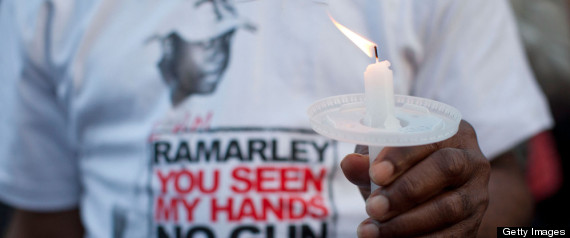
The Death of Ramarley Graham - Bronx, New York

Ramarley Graham
**************************************************************************************

Family Of Ramarley Graham, Bronx Teen Killed By NYPD, Fills Courtroom As Judge Clears Way For Civil Case

Posted: Updated:

Main Entry Image

By Jeff Mays
U.S. DISTRICT COURT — The family of Ramarley Graham, the unarmed teen gunned down by police in his own home, hope that a federal civil suit will offer a second chance at justice that was denied when the criminal case against the police officer who shot Graham fell apart.

The lawsuit, and another filed by Graham's neighbor who was threatened by police just before the shooting, was cleared to proceed by U.S. District Court Judge P. Kevin Castel Tuesday. Both suits name former Police Commissioner Raymond Kelly and the NYPD as defendants.

"[Officer] Richard Haste should have been indicted," said Ramarley Graham's mother Constance Malcolm, referring to the officer who fired the fatal shot at her son almost two years ago. "The courtroom today was packed, which shows people want to see justice done."

On Feb. 2, 2012, officers from a special narcotics unit chased Graham, 18, from White Plains Road and East 228th Street to his home at 749 E. 229th St. in Wakefield because officers investigating a drug deal believed Graham had a gun in his waistband.

Officers chased Graham into his home, and Officer Richard Haste fatally shot the teen once in the chest in the bathroom. Police say they recovered a small bag of marijuana in the toilet. No weapon was found.

An initial indictment for manslaughter against Haste was dismissed by Supreme Court Justice Steven L. Barrett on May 15 after he ruled that the Bronx D.A. made an error in instructing the grand jury not to consider the fact that other officers told Haste that Graham had a gun.

Bronx District Attorney Robert Johnson brought the case before a second grand jury. On Aug. 7 it was revealed that the new grand jury did not indict Haste. Sources say the officer gave more emotionally compelling and precise testimony than during the first grand jury hearing.

After the grand jury decision, the U.S. Attorney's Office announced that it would review whether  Haste violated Graham's civil rights in the shooting death. That review is still pending, Graham attorney Royce Russell told Castel.

Also pending is the NYPD Internal Affairs Bureau review of the shooting which could determine whether the city also must represent Haste, said the officer's attorney.

Graham's family aren't the only people filing a lawsuit related to the incident that day. Attorney Andrew Hoffman represents Paulet Minzie, the owner of the building where Graham lived as well as her 8-year-old grandson Jyevion Dixon and his father Eric Dixon.

Hoffman alleges that Haste and other officers began pounding on the back door after Graham entered the home. He claims police pointed a gun at the 8-year-old to gain entry to the building and also at the boy's father and Minzie who had exited the shower with just a towel covering her when she heard a commotion.

Hoffman claims that police pointed a gun at Minzie causing her to drop her towel, exposing herself to the male officers and also to urinate on herself. They are suing the city for warrantless entry and trespassing among other claims.

"Officer Haste put his gun in the face of this 8-year-old child and ordered him outside," said Hoffman.

Castel ordered that the two cases proceed on the same discovery schedule. He also suggested mediation as a possible resolution to the Minzie case and possibly the Graham case. All parties are due back in court on Aug. 1.

"You can never fully compensate someone for the loss of their child," Russell said. "New York City and the police department officials above Richard Haste need to be held accountable for allowing this tragedy to take place."
 *********************************************************************************************

Ramarley Graham Case: Judge Tosses Indictment Against Richard Haste, NYPD Cop Who Killed Bronx Teen

Posted:   |  Updated: 05/15/2013 12:17 pm EDT

A Bronx judge Wednesday tossed out an indictment against an NYPD cop who shot and killed a Bronx teen.

ABC reports the judge said an assistant district attorney made an accidental mistake when presenting the manslaughter charges against Officer Richard Haste to the grand jury in the death of 18-year-old Ramarley Graham.

"This is an outrageous miscarriage of justice and an insult to the family and supporters of Ramarley Graham," Reverend Al Sharpton said in a statement. "We demand that a new Grand Jury is convened immediately and that the case is re-presented. We will be rallying and planning direct action at National Action Network’s Saturday action rally. The family will be present."

And Frank Graham, father of the slain teen, said they'd keep fighting for justice.

“If it means going back to the grand jury or if we have to ask the federal court to deal with this case; we are going to keep fighting no matter what,” he said in a statement. “Where ever it leads us we will go there. We will never stop until justice is served in this case, until Richard Haste goes to prison for murdering our son. If we start over, we will start stronger!”

According to ABC, prosecutors will get another chance to present the case to a grand jury.

In February of 2012, Haste and his partner followed Graham into his grandmother's apartment where Graham was attempting to flush a bag of marijuana down the toilet. Haste fatally shot Graham, who was unarmed, in the chest. The officers did not have a warrant to be inside the home.
************************************************
The Death of Jordan Davis - Jacksonville, Florida


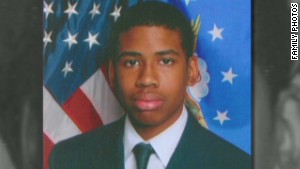
Jordan Davis

BREAKING: Florida Man Who Shot Unarmed Black Teen After Loud Music Dispute Convicted Of Murder

Posted on

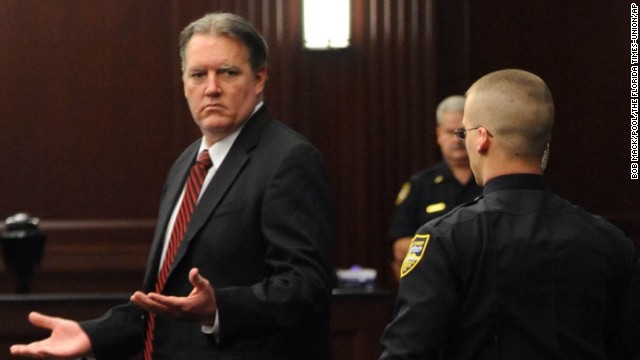
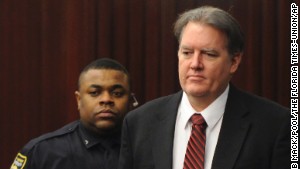
Michael Dunn in court
CREDIT: AP Photo/The Florida Times-Union, Bob Mack, Pool

On the second try, prosecutors secured a first degree murder conviction of Michael Dunn, the man who shot and killed 17-year-old Jordan Davis after a dispute over loud music at a Jacksonville convenience store.

Jurors found Dunn guilty of first-degree murder late Wednesday afternoon, more than seven months after another jury deadlocked on whether to convict Dunn of that charge. The racially tinged Stand Your Ground case sparked national outrage and evoked memories of Trayvon Martin and other shootings of young, black men in purported self-defense.

Jordan’s father Ron Davis said after the verdict Thursday that he “wanted Jacksonville to be an example” that you can have a jury made up of mostly white individuals, and still see justice. “ Let’s make sure the decisions we make … are based on witness’ testimony and the importance of the case and not a bias against one another,” he said.

The shooting occurred in the parking lot outside a Jacksonville convenience store, after Dunn asked the car of teens including Davis to turn their music down. His fiancĂ©e, Rhonda Rouer, says the last thing she heard him say was, “I hate that thug music.” Rouer was in the convenience store when she heard gunshots, and when she ran outside, he told her to get in the car and they drove away.

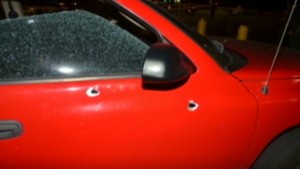
Dunn claimed he saw a gun and believed the boys were armed and dangerous. But police found no gun in the car. He said he heard Davis threaten to kill him, and responded by rolling down the window of his car and asking, “Are you talking to me?” Dunn and Rouer left the scene without calling 911 and spent the night in a hotel, as planned, and their testimony differed about what happened that night, and in the days that followed.

In February, Dunn was found guilty on three counts of second-degree attempted murder — one for each of three of Dunn’s friends who were also in the line of fire as Dunn fired ten rounds into their sport utility vehicle. The jury deadlocked on the first-degree murder charge, the judge declared a mistrial on the first degree murder count, allowing prosecutors to reach a new trial. Dunn faces a mandatory sentence of 25 years to life in prison without parole.

Just prior to that first trial, the State Attorney’s Office released a set of letters Dunn sent from prison revealing significant animus toward blacks. “The more time I am exposed to these people, the more prejudiced against them I become,” he said in one. “This jail is full of blacks and they all act like thugs,” he said in another.

The letters did not come into play during trial. But they reveal the sort of racial undertones that have been prominent in many Stand Your Ground cases. One study found that white defendants with black victims are far more likely to have their killings deem “justified” under the Stand Your Ground law, which was cited during the first trial. After that trial, one juror told ABC News that the reason for the deadlock was because several jurors believed Dunn was “justified” in shooting Davis under Florida’s self-defense laws. She pointed to a section of the jury instructions that includes the state’s notorious Stand Your Ground law as being central to their deliberations.

***********************************

Dunn convicted of attempted murder; hung jury on murder in 'loud music' trial

By Greg Botelho, Steve Almasy and Sunny Hostin, CNN
updated 2:03 AM EST, Mon February 17, 2014
Watch this video

Jury finds Dunn guilty on four counts


STORY HIGHLIGHTS
  • Michael Dunn is convicted on three counts of attempted second-degree murder
  • But there's a mistrial on first-degree murder; prosecutors say they'll seek a new trial
  • Dunn faces 60 years in prison, possibly 15 more for another charge
  • The teen killed, Jordan Davis, would have celebrated his 19th birthday Sunday
Jacksonville, Florida (CNN) -- Nineteen years ago, Ron Davis and Lucia McBath celebrated the birth of a son.

Sunday, they should have celebrated Jordan Davis' birthday with him. Instead, they faced the prospect of a new trial for the man accused of killing him.

A jury in Jacksonville on Saturday found Michael Dunn guilty of attempted second-degree murder for opening fire on three other teens in the same SUV as Jordan Davis -- but deadlocked on the murder charge against him in Davis' death.

Prosecutors had argued that Dunn recklessly shot at the teens after complaining about the volume of their music in a convenience store parking lot. Three of his 10 shots struck Davis, one of them cutting through his liver, a lung and his aorta.

Dunn testified that Davis threatened him and that he thought he saw a gun sticking out of the Dodge Durango.
But Ron Davis said his son was a good kid and didn't deserve to be collateral damage in an argument over loud music. McBath said she was happy for a little bit of closure.

"It's sad for Mr. Dunn that he will live the rest of his life in that sense of torment, and I will pray for him," McBath said. "And I have asked my family to pray for him, but we are so grateful for the charges that have been brought against him. We are so grateful for the truth."

And moments before prosecutor Angela Corey said she would seek a new trial on the murder charge, McBath said she and her ex-husband will continue to stand up for their son, who was 17 when he was killed.


Dunn's attorney: There were no winners

Jordan Davis' mom: Grateful for verdict

Michael Dunn trial is in jury's hands

"We will continue to wait for justice for Jordan," she said.

Shooter faces decades in prison

A jury on Saturday night convicted Dunn of three charges of attempted murder for shooting at the other three teenagers in the SUV and one count of shooting into the vehicle on November 23, 2012.

As the jury's decisions became clear about 7 p.m. Saturday, Dunn looked ahead solemnly with a frown but no tears. His lawyer, Cory Strolla, told reporters later that his client was "in disbelief."

"Even as he sat next to me, he asked, how is this happening," Strolla said. "... It has not set in. I don't think it will set in anytime soon."

Ron Davis was pleased that Dunn face 60 years or more in prison for the attempted murder charges.
"He is going to learn that he must be remorseful for the killing of my son, that it was not just another day at the office. My son will never be just another day at the office where (Dunn) can leave the scene and be stoic," he told reporters.

He wanted it known that Jordan was not a troublemaker.

"It wasn't allowed to be said in the courtroom, but he was a good kid. We will say it. He was a good kid," he said. "There are a lot of good kids out there ... and they should have a voice. They shouldn't live in fear and walk around the streets worrying about if someone has a problem with somebody else that if they are shot, it is just collateral damage."

The incomplete finale to this hot-button trial -- emotionally charged partly because Dunn is white and the teenagers he shot at are black -- echoed George Zimmerman's trial for the killing of 17-year-old Trayvon Martin about 120 miles down the road in Sanford, Florida. While the state's "stand your ground" law wasn't used by Dunn, his lawyers did argue that he fired in self-defense.


Another murder trial?

Given the partially hung jury, Corey, Florida's state attorney, said prosecutors would press for a new trial in Duval County on the murder charge.

"Justice for Jordan Davis is as important as it is for any victim," said Corey, whose office also handled the Zimmerman case.


Closing arguments wrap up Dunn trial

Dunn: 'It was life or death'

Michael Dunn: I was fighting for my life
 
Even without a final decision on the murder count -- and pending defense appeals -- the 47-year-old Dunn is looking at a lengthy prison term.

Prosecutor Erin Wolfson explained Saturday night that each attempted second-degree murder conviction carries a minimum sentence of at least 20 years. There's also a 15-year sentence possible on the conviction for shooting into the teenagers' vehicle.

"You are looking basically at life in prison," Strolla said, even as he vowed to challenge the convictions. "At 47 years old, that's a life sentence regardless of count one."

CNN legal analyst Paul Callan said in most cases prosecutors will take some time after a mistrial to reflect on the case before planning the next steps.

"If he winds up with 60 or 75 years in jail, from a pragmatic standpoint it doesn't make a whole lot of sense to retry the case," he said Sunday. "On the other hand if you're the parents of Jordan Davis and you believe, as well you should, that your son's reputation has been besmirched by this self-defense claim, the family (might) want a retrial, and that's something that a prosecutor has to consider carefully.

"Hopefully (Corey will) look carefully at the pluses and minuses of doing a retrial."

The decision to convict on these counts, and not on murder, didn't come easily for a jury that had deliberated for about 30 hours since getting the case late Wednesday.

Judge Russell Healey acknowledged earlier Saturday that the jury of four white women, two black women, four white men, an Asian woman and a Hispanic man was "struggling, obviously."

"But it's not for want of trying to reconcile all of this," he said then. "I think we've got some analytical people in there who are trying to do just that -- trying to analyze this from every possible angle."

The lack of a murder conviction upset some, including protesters who marched outside the Jacksonville courthouse calling for Corey to lose her job. "The people united will never be defeated," they chanted.

Confrontation at a gas station

It was November 23, 2012, when Michael Dunn pulled into a gas station in Jacksonville, parking next to a red Dodge Durango with four teenagers inside.

The teens had come in for gum and cigarettes; Dunn, meanwhile, had just left his son's wedding with his fiancee, who'd gone inside the convenience store for wine and chips.

Dunn didn't like the loud music -- "rap crap," as he called it -- coming from the teens' SUV. So he asked them to turn it down.

What followed next depends on whom you believe. Dunn says Davis threatened him, and he decided to take matters into his own hands upon seeing what he thought was the barrel of a gun sticking out of the Durango.
But prosecutors say it was Dunn who lost control, firing three volleys of shots -- 10 bullets total -- at the SUV over music he didn't like.

Prosecutors challenged what he did next: He left the gas station and drove to his hotel, about three miles away. There, Dunn walked his dog, ordered a pizza, then drank rum and cola -- "stunned and horrified, (shocked how) things escalated the way they did over a common courtesy."

After learning almost six hours later that he had killed Davis, Dunn testified that he became "crazy with grief," experiencing stomach problems for about four hours before taking a nap.

"My intent was to stop the attack, not necessarily end a life," he testified. "It just worked out that way."
Yet his fiancee, Rhonda Rouer, testified that Dunn had never mentioned any weapon to her -- be it a shotgun, a stick, a barrel or a lead pipe.

In fact, police found a basketball, basketball shoes, clothing, a camera tripod and cups inside the teenagers' Durango. There was no gun.

Dunn himself never called police. The first contact he had with them was at his home in Satellite Beach as he was being apprehended.

Arguing that he wasn't in a rational state of mind, Dunn admitted, "It makes sense that I should have (contacted authorities). We didn't. I can't tell you why."

Echoes of Trayvon Martin and George Zimmerman

Some people were quick to compare Dunn to Zimmerman, who ultimately was acquitted of murder for the shooting of Martin.

Martin's own parents were among them, claiming Davis' killing is another reminder that, in Florida, "racial profiling and stereotypes" may serve as the basis for illegitimate fear "and the shooting and killing of young teenagers."

But Dunn's defense attorney, Strolla, told CNN's Chris Cuomo on Friday that the Zimmerman and Dunn cases aren't so similar.

There was a physical confrontation between Zimmerman and Martin, and police gave Zimmerman the benefit of the doubt about defending himself, Strolla said.

"My client did not wait to become that victim," he said. "My client did not wait to either get assaulted by a weapon or have someone potentially pull a trigger," he said.

Though a weapon was never found, Strolla maintains the youths could have had one and somehow ditched it. He said the key point was that Dunn believed they were armed and that his life was in danger.

"Now, does it sound irrational? Of course it sounds irrational. But have you ever been in that situation?" the lawyer asked.

Strolla said Saturday the four convictions leave him with regret, even as he said he couldn't immediately think of anything he'd do differently in the case.

At the same time, the prosecution didn't manage a conviction on what was by far the biggest charge: first-degree murder.

This mixed bag means that no one can fully celebrate the jury's decision.

"Everybody lost something in this," the lawyer said.

His client "will live to fight another day" in court, but he and his loved ones are suffering now, Strolla said. He acknowledged, too, the pain felt by Davis' family.
***************************************************************************

black,, 17,, and, shot, dead, in, florida:, why, isnt, jordan, davis, getting, the, attention, travyon, martin, is?, Florida man shoots and kills 17-year-old teen after argument over loud music at gas station

Michael Dunn, 45, shot and killed teen Jordan Davis in Jacksonville on Friday, cops said. His lawyer said he acted in self-defense, drawing comparisons to the Trayvon Martin case.

Comments (322)


 Investigators say Michael Dunn, 45, of Brevard County shot Jordan Davis, 17, of Jacksonville on Nov. 23, 2012 in an argument over loud music.

Investigators say Michael Dunn, 45, of Brevard County, shot Jordan Davis, 17, of Jacksonville on Friday after an argument over loud music at a gas station.

A Florida man asked a group of teens at a gas station to turn down the loud music blaring from their car and, after an exchange of words, opened fire on the vehicle, killing a 17-year-old boy, authorities said.
 
His lawyer said Dunn, who is white, thought he saw a gun and felt threatened during the incident, indicating that he may seek protection under the state’s controversial Stand Your Ground Law, according to local reports.

"Self defense applies because Mr. Dunn was threatened," attorney Robin Lemonidis told CNN.
"We can't say what the defense will be at this stage … but Stand Your Ground is a possibility."

The alleged murder occurred on Friday as Dunn and his girlfriend were traveling to Jacksonville for his son’s wedding, the Orlando Sentinel reported. 

The pair pulled into a gas station parking lot and stopped next to an SUV, which Davis was sitting in with three other teens, authorities said.

While his girlfriend was inside the store, Dunn asked the teens to turn down the loud music they were playing, cops said.

Davis said something back and there was a heated exchange, authorities said.

Dunn then pulled a gun and fired at least eight shots, hitting Davis twice, cops told the Sentinel.
Dunn and his girlfriend then left the scene.

The Sentinel said the two were staying in a Jacksonville hotel on Saturday when they heard news reports about the teen’s death and drove back to his home in Satellite Beach.

He was arrested at his home on Saturday and charged with murder and attempted murder.
He remains in jail after being denied bond on Monday.

No guns were found inside the teens’ car, authorities said.

Davis’ family demanded justice, saying there was no way Dunn fired in self-defense.
 
"He did something that there was no defense for," Ron David, Jordan’s father, told CNN.

The shooting immediately drew comparisons to the murder of Trayvon Martin in February, which sparked protests over Florida’s self defense laws and accusations that George Zimmerman, the neighborhood watch volunteer who shot him, was a racist.

Lemonidis said his client was “no vigilante.”

“There are no comparisons to the Trayvon Martin situation," Lemonidis told CNN. "(Dunn) is devastated and horrified by the death of the teen."

Jordan, who was a student at a magnet school in Duval County, will be buried in his hometown of Marietta, Ga., where his mother lives, according to reports.
****************************************************

The Death of Trayvon Martin - Sanford, Florida

George Zimmerman


Trayvon Martin


Jury Finds George Zimmerman Not Guilty


By | Yahoo! News – Sat, Jul 13, 2013

SANFORD, Fla--George Zimmerman, the neighborhood watchman whose trial for the killing of unarmed black teenager Trayvon Martin riveted viewers and sparked a national conversation about race and justice, was found not guilty on all charges Saturday. 

Zimmerman, 29, was acquitted on charges of second-degree murder in the death of Martin, a 17 year old whom the defendant shot during a scuffle in a nearby gated community on Feb 26, 2012. The six-woman jury also found Zimmerman not guilty of the lesser charge of manslaughter.

The jury signaled they had reached a verdict 9:45 pm ET and filed into the courtroom around 10 pm. After the verdict was read, Judge Debra Nelson polled the jurors to make sure each agreed with the decision. She then told Zimmerman he was free to go.

Zimmerman showed little emotion as the verdict was announced.

The decision from the jury had been expected to spark outrage from Martin family supporters who say the teen's death was ignored by police and prosecutors for weeks because of his race. Martin was black, and Zimmerman is half white and half Hispanic. But more than an hour after court was adjourned, only a handful of demonstrators were outside the courthouse and they were heavily outnumbered by members of the media trying to interview them. 

Estefania Galvez, a protester with the national "Justice for Trayvon" group, said protesters will hold a press conference on Sunday at the courthouse to announce a national day of protest on Monday. There were reports of some demonstrations in other cities sparking late Saturday night. Dozens of people marched in San Francisco holding signs in support of Martin, and another spontaneous rally was reported in Washington D.C.

Martin's parents, Sybrina Fulton and Tracy Martin, were not in the courtroom when the verdict was read. They later tweeted thanks to their supporters. 

"Lord during my darkest hour I lean on you. You are all that I have. At the end of the day, GOD is still in control," Fulton tweeted. "Thank you all for your prayers and support. I will love you forever Trayvon!!! In the name of Jesus!!!"

Tracy Martin, Trayvon's father, tweeted, "Even though I am broken hearted my faith is unshattered I WILL ALWAYS LOVE MY BABY TRAY," he wrote.

The jurors deliberated 12 hours on Saturday--including a one-hour lunch during which they were allowed to discuss the case--before alerting the court that they would like the attorneys to clarify the charge of manslaughter. The attorneys on both sides told the jury that they could not speak about the charge "in general terms" but would be happy to answer a more specific question.

The jury never sent back a more specific inquiry. They only made one other request during their deliberations--for an itemized list of all the evidence presented during the trial on Friday. They reached their verdict after 16 hours of deliberating over two days. The jurors, whose identities are protected by a court order, declined an opportunity to talk to the media after the verdict.

In a televised three-week trial, jurors heard the defense and prosecution each paint very different pictures of the night in question. Zimmerman was an angry “wannabe cop” who was seething with anger at a rash of break-ins in his neighborhood when he pursued and shot Martin, the state has argued. The defense, meanwhile, maintained Zimmerman was within his rights to follow and question Martin, and that it was the teen who became violent, prompting Zimmerman to shoot as a way to save his own life.

The case ignited a national debate over self-defense laws and race, prompting marches and demonstrations around the country. Local leaders have urged members of the community to remain peaceful no matter what verdict the jury hands down.

The prosecution failed to convince the jury that Zimmerman had “a depraved mind without regard for human life” when he shot Martin, which was required for second-degree murder. A lesser manslaughter conviction could have been handed down if the jury believed Zimmerman had no lawful reason to kill Martin, even if he bore Martin no ill will. The law says if Zimmerman had a “reasonable” belief that his own life was in jeopardy or that he could suffer bodily harm from Martin, he was justified in killing him.

At a press conference following the verdict, prosecutors expressed disappointment with the outcome but urged the community to remain calm.

"We have from the beginning just prayed for the truth to come out and for peace to be the result and that continues to be our prayers," prosecutor John Guy said.

But prosecutor Bernie de la Rionda insisted the fundamentals of the case should have favored the prosecution. "We respect the jury's verdict but really this is about a kid being followed by a stranger," de la Rionda said.

Benjamin Crump, a civil rights attorney advising the Martin family, echoed that plea. "For Trayvon to rest in peace, we must all be peaceful," Crump said at a press conference.

Zimmerman's defense attorney, Mark O'Mara, told reporters that he believed Zimmerman will now try to return to a normal life. O'Mara said that Zimmerman was used as a "scapegoat" by people who wanted to create a civil rights violation, and was thus overcharged in the crime. "It certainly wouldn't have happened if he was black," O'Mara said of his client being charged with murder.

O'Mara also compared the media to "mad scientists" who had turned his client into a "monster" with shoddy reporting.

O'Mara mentioned that he will vigorously defend any forthcoming civil charges against his client, and that he may seek to recoup some of Zimmerman's defense costs from the state.

Witnesses gave conflicting testimony over who was the aggressor of the fight and both Zimmerman's family and Martin's family have claimed it was their relative who could be heard screaming for help in the background of a 911 call during the fight.

Zimmerman wasn’t arrested in the shooting for weeks, after a public outcry. Bill Lee, then the police chief of Sanford, said Zimmerman was justified under Florida’s stand your ground self defense law. Lee lost his job after the incident, and a special prosecutor was appointed to argue the case.
****************************************************